Flash Flood and Street Flooding Cleanup in New Orleans, LA
When a downpour outruns the pumps, water enters through doors and low openings in New Orleans buildings, and fast removal of flooring, drywall and insulation keeps the damage from spreading.
(888) 417-5665Call for flood cleanup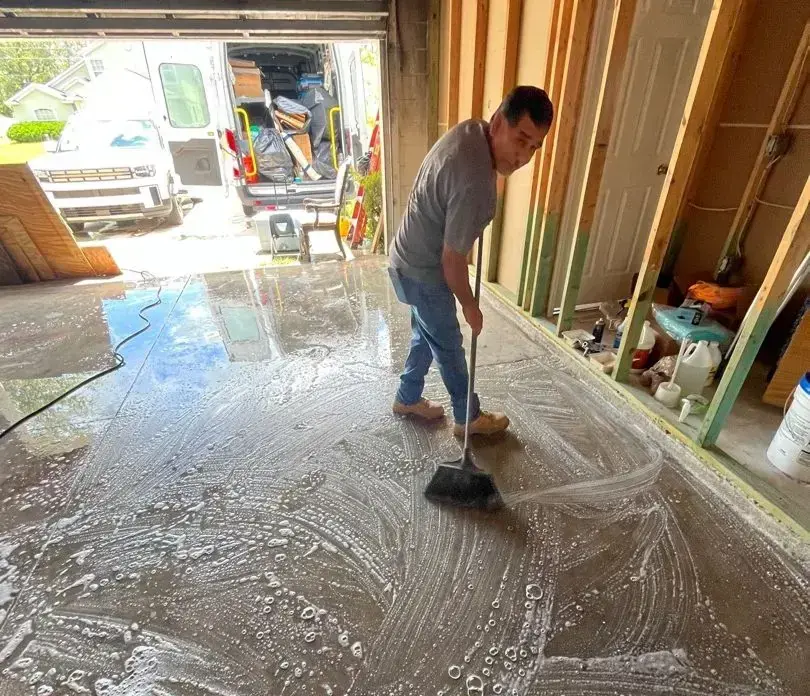
First steps for flash flood and street flooding cleanup in New Orleans
- 1
Stay out of moving water. Street floodwater can hide hazards and carry contamination, so wait until it recedes.
- 2
Cut the power. Switch off the main breaker if water is near outlets and it is safe to reach.
- 3
Lift valuables up. Move electronics, papers and small furniture onto high shelves.
- 4
Photograph the water mark. Record how high the water rose on walls and furniture.
How the New Orleans restoration team handles flash flood and street flooding cleanup
Rapid local response
Dispatch runs 24/7 across New Orleans, and any active water is treated as urgent at any hour, storms and holidays included.
IICRC S500 drying standard
The drying team sizes air movers and LGR dehumidifiers to the class of loss and keeps them running until the readings say dry.
Claim-ready documentation
A moisture map, daily psychrometric logs and timestamped photos taken before demolition go into the file for the adjuster.
Humid Gulf Coast know-how
Outdoor air near the river holds a lot of moisture, so the crew dries inside closed containment instead of opening windows.
What does flash flood and street flooding cleanup cost in New Orleans, LA?
Flash flood cleanup in New Orleans usually costs $4,000 to $9,000 for a few inches in one area, $9,000 to $18,000 for several rooms and $18,000 to $30,000+ for a whole ground floor. Contaminated water adds removal work.
A few inches in one area
- Carpet and pad hauled out
- Flood cuts made
- Antimicrobial applied
Several rooms
- Drywall and insulation removed
- Flooring pulled up
- Containment barriers
Whole ground floor
- Most walls cut open
- Cabinet bases assessed
- Extended drying
Ranges are typical, not a quote: water category, square footage, material class and how fast drying started move the number most. Run the water damage cost calculator for a closer range.
How flash flood and street flooding cleanup is handled in New Orleans
Pump it out
Standing water is removed, starting with the deepest areas.
Cut and clear
Wet materials are cut out and hauled away.
Sanitize the area
Surfaces get an antimicrobial treatment.
Dry and verify
Equipment runs while readings are logged each day.
New Orleans drains by pump, and the system capacity is often described as 1 inch in the first hour of rain and 0.5 inch for each additional hour. On July 11, 2026 more than 3.5 inches fell during one hour across Uptown, Hollygrove and Carrollton, and SWBNO said the volume exceeded what the pump system can handle. Water that gets indoors in these events is treated as contaminated.
What a flood cleanup removes
- Carpet and pad that soaked up street water
- Drywall and insulation cut above the wet mark
- Baseboards and trim that trap moisture behind them
- Flooring that cannot be cleaned and dried in place
- Debris and mud that came in with the water
Why waiting makes it worse
Water that has stood in a building through a pump delay is slow to leave on its own. During the July 2026 flood, Pritchard Pump Station had only one of two pumps running and water near Hollygrove stayed high for about two hours, while Drange Pump Station 7 left parts of Lakeview and Mid-City high for about an hour and a half. Floodwater also entered a barber shop on Banks Street.
Cleaning contaminated floodwater
Street floodwater can carry sewage and runoff, so it is classed as black water. The crew pumps the building out, removes soaked carpet, pad and drywall, applies an antimicrobial, and then sets air movers and dehumidifiers. Sewage backup cleanup follows the same contained approach when the water came up through drains.
Drying and records
After removal, structural drying equipment runs until moisture readings fall to a dry goal. Photos and readings are saved so the property owner has a record to share with an insurer, who decides what the policy pays for flood versus rain. Flood and wind rain claims are often handled differently, so policy wording matters.
Flash Flood and Street Flooding Cleanup across New Orleans and nearby towns
Marrero Water Damage Restoration responds to flash flood calls in New Orleans ZIP codes 70112, 70119 and 70124, covering Mid-City, Lakeview, Carrollton, Hollygrove and Banks Street.
The same service nearby: flash flood and street flooding cleanup in Marrero, Gretna, Westwego.
Related water damage services in New Orleans
Flash Flood and Street Flooding Cleanup questions in New Orleans, LA
Water spreading as you read?
Call and describe the water level. The crew explains what comes out, what stays and how drying will be tracked.
(888) 417-5665 Read flood cleanup questionsIs floodwater from the street considered contaminated?
Yes. It can carry sewage, runoff and debris, so porous materials such as carpet, pad and drywall are usually removed instead of dried, and surfaces are sanitized.
How deep does the water have to be before it matters?
Even a few inches soak carpet, pad and the bottoms of walls. Depth matters less than how long the water stays, so removal should start as soon as it is safe to enter.
What are flood cuts?
A flood cut removes drywall and insulation a set height above the wet mark so the wall cavity can be inspected and dried. It keeps the clean upper wall in place.
Why does water stay in buildings after the rain stops?
The city has no natural outlet for surface water, so rain inside the levees has to be pumped out, and heavy bursts can leave buildings wet while the streets drain.
Will insurance cover flash flood damage?
That depends on the policy. Many policies treat rising water differently from rain through the roof, so ask your insurer, and keep photos, readings and removal lists.
How long does the drying take afterward?
It depends on how much was removed and how wet the structure is, and humid air slows it. Daily readings decide when equipment comes out.
Clear the flood damage from your New Orleans property
Call and describe the water level. The crew explains what comes out, what stays and how drying will be tracked.
(888) 417-5665Call the flood crew