Structural Drying in New Orleans, LA
Below sea level ground and humid Gulf air make wet framing and drywall slow to dry in New Orleans, so the equipment and the readings decide when a building is truly dry.
(888) 417-5665New Orleans structural drying help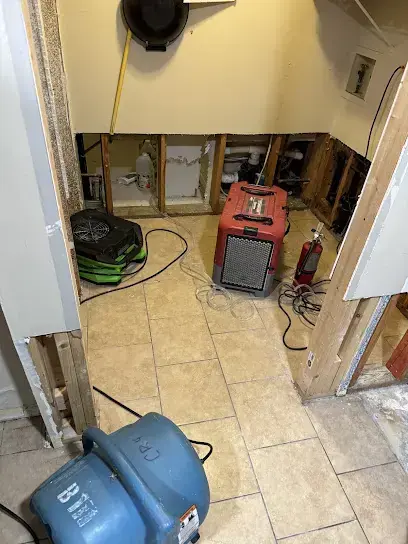
First steps for structural drying and dehumidification in New Orleans
- 1
Stop the water source. Fix the leak or close the valve first.
- 2
Open the wet space. Remove standing water and open doors, cabinets and closets.
- 3
Keep the windows shut. Closed air helps dehumidifiers work properly.
- 4
Leave the equipment running. Do not turn units off or move them without telling the crew.
How the New Orleans restoration team handles structural drying and dehumidification
Rapid local response
Dispatch runs 24/7 across New Orleans, and any active water is treated as urgent at any hour, storms and holidays included.
IICRC S500 drying standard
The drying team sizes air movers and LGR dehumidifiers to the class of loss and keeps them running until the readings say dry.
Claim-ready documentation
A moisture map, daily psychrometric logs and timestamped photos taken before demolition go into the file for the adjuster.
Humid Gulf Coast know-how
Outdoor air near the river holds a lot of moisture, so the crew dries inside closed containment instead of opening windows.
What does structural drying and dehumidification cost in New Orleans, LA?
Structural drying in New Orleans usually costs $1,000 to $2,500 for one room at Class 1 or 2, $2,500 to $5,000 for several rooms and $5,000 to $8,000+ for Class 4, slab or hardwood work.
One room, lighter wetness
- A few air movers running together
- One dehumidifier
- Daily moisture readings
Several rooms
- Containment barriers set
- Several LGR units
- Psychrometric log kept
Class 4, slab or hardwood
- Desiccant drying units
- Drying mats on floors
- Longer monitoring period
Ranges are typical, not a quote: water category, square footage, material class and how fast drying started move the number most. Run the water damage cost calculator for a closer range.
How structural drying and dehumidification is handled in New Orleans
Measure first
Meters and humidity readings set the starting numbers.
Set equipment
Air movers and dehumidifiers go in, sized to the room.
Log daily
Readings are recorded and equipment is adjusted.
Verify dry
Equipment leaves only when materials reach their targets.
Much of New Orleans sits at or below sea level, and the climate adds more than 80 days a year at 90 degrees or higher, so the air is often as wet as the structure. Drying works by moving moisture out of materials and then out of the building, which is why the equipment is sized to the room and the humidity, not guessed.
How drying classes change the setup
- Class 1 or 2 jobs use a few air movers and one dehumidifier
- Larger losses add several LGR units and containment
- Class 4 jobs, slab and hardwood bring in desiccant drying
- Drying mats pull moisture out of stubborn flooring
- Daily visits record temperature, humidity and moisture content
Reading the numbers
A moisture meter shows how wet a material is, and psychrometric readings track the temperature and humidity of the air. Both are logged each visit. The goal is a set of dry targets taken from unaffected materials in the same building, and equipment stays until the wet materials match those targets.
Containment and airflow
Plastic containment keeps wet zones separate from dry rooms, so the equipment dries what is wet instead of pulling moisture through the whole house. Air movers are placed to sweep wall bottoms and floors, while dehumidifiers remove the water the air absorbs. Wall cavities may be opened or drilled so moisture can escape from inside.
When the work ends
Equipment comes out only after final readings match the dry targets. Before that, water extraction removes standing water, and after sewage losses sewage backup cleanup comes first. Photos, logs and the readings are kept for the property owner and the insurer. Damp materials can start growing mold within 24 to 48 hours, so drying is not left to chance.
Structural Drying and Dehumidification across New Orleans and nearby towns
Marrero Water Damage Restoration handles structural drying jobs in New Orleans ZIP codes 70116, 70118 and 70122, including Gentilly Terrace, Pontchartrain Park, Milneburg and the Garden District.
The same service nearby: structural drying and dehumidification in Marrero, Gretna, Westwego.
Related water damage services in New Orleans
Structural Drying and Dehumidification questions in New Orleans, LA
Water spreading as you read?
Call and describe the wet rooms. The crew explains the equipment plan, how readings are logged and when each unit will be removed.
(888) 417-5665 Read structural drying questionsWhy do dehumidifiers run for several days?
Materials such as framing, subfloor and drywall release moisture slowly, and humid Gulf air slows evaporation, so equipment runs until readings, not the calendar, say the structure is dry.
What is an LGR dehumidifier?
A low grain refrigerant unit that pulls moisture from the air more efficiently at low humidity, which makes it a standard choice for drying wet structures.
When is desiccant drying used?
Desiccant units suit dense materials such as slabs and hardwood, and very wet or cool spaces, where a refrigerant dehumidifier struggles to pull moisture out.
Can I open windows to help drying?
Usually not. Humid outdoor air works against the equipment, so windows stay closed and the dehumidifiers dry the air inside the sealed space.
How does the crew know when it is dry?
Moisture meters compare wet materials with dry reference readings from the same building, and the equipment is removed only after the numbers match.
What does the equipment draw in power?
Several air movers and a dehumidifier use household power across circuits, and the crew plans cords and breakers so nothing overloads. After a hurricane, generators may be used.
Dry the structure until readings say it is dry
Call and describe the wet rooms. The crew explains the equipment plan, how readings are logged and when each unit will be removed.
(888) 417-5665Call about drying equipment