Structural Drying and Dehumidification in Westwego, LA
At about 3 feet of elevation and with a wet Gulf climate, Westwego buildings need thorough drying after water gets in. Equipment, readings and logs show when the structure is dry.
(888) 417-5665Westwego structural drying help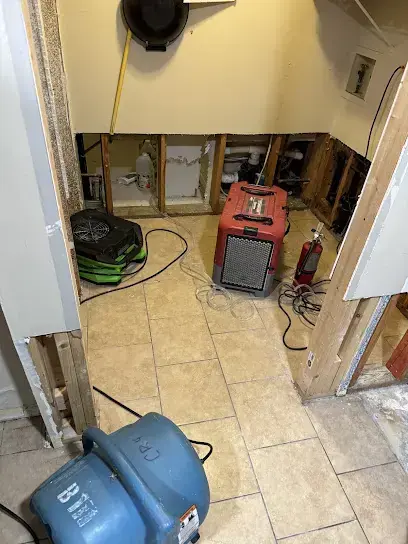
First steps for structural drying and dehumidification in Westwego
- 1
Keep doors closed. Closed windows and doors let dehumidifiers pull moisture from the air.
- 2
Leave equipment running. Do not turn off air movers or dehumidifiers between visits.
- 3
Move furniture out. Clear wet rooms so airflow reaches walls and floors.
- 4
Keep the records. Save moisture logs and photos for the insurance file.
How the Westwego restoration team handles structural drying and dehumidification
Rapid local response
Dispatch runs 24/7 across Westwego, and any active water is treated as urgent at any hour, storms and holidays included.
IICRC S500 drying standard
The drying team sizes air movers and LGR dehumidifiers to the class of loss and keeps them running until the readings say dry.
Claim-ready documentation
A moisture map, daily psychrometric logs and timestamped photos taken before demolition go into the file for the adjuster.
Humid Gulf Coast know-how
Outdoor air near the river holds a lot of moisture, so the crew dries inside closed containment instead of opening windows.
What does structural drying and dehumidification cost in Westwego, LA?
Structural drying in Westwego usually costs $1,000 to $2,500 for one room, $2,500 to $5,000 for several rooms, and $5,000 to $8,000+ for slab, hardwood or the heaviest losses. Run time depends on readings, not a fixed schedule.
One room, light loss
- A few air movers
- One dehumidifier
- Daily readings
Several rooms
- Containment barriers
- Several LGR units
- Psychrometric log
Slab or hardwood
- Desiccant drying
- Drying mats
- Longer monitoring
Ranges are typical, not a quote: water category, square footage, material class and how fast drying started move the number most. Run the water damage cost calculator for a closer range.
How structural drying and dehumidification is handled in Westwego
Measure
Meters map every wet wall, floor and ceiling before equipment goes in.
Set up
Air movers, dehumidifiers and containment are placed to match the loss.
Monitor
Readings are logged each visit and gear adjusted.
Release
Equipment leaves once materials reach the dry reference.
Removing standing water is only half the job. Water that soaked into drywall, framing, subfloor and concrete keeps releasing moisture into the room until it is pulled out on purpose. Structural drying is that purpose built stage, and it follows the IICRC S500 standard, which sets how equipment is placed and how results are proven. A building that only feels dry can still hold a lot of water.
Why Westwego homes need patient drying
Low ground, a wet Gulf climate and humid air outside make drying slower than in dry regions. Westwego sits at about 3 feet of elevation, and with the air already heavy, a closed house with wet materials can hold moisture for a long time. Dehumidifiers do the real work, with the building sealed so the equipment can win over the humidity outdoors.
How equipment is chosen
- Light losses with limited wet material use a few air movers and one dehumidifier.
- Water that came from above calls for more airflow across walls and ceilings.
- Slab or hardwood losses, the heaviest kind, need desiccant units and drying mats.
- Containment keeps the dry zone sealed from the rest of the house.
- Placement is adjusted every visit as readings change.
Reading the numbers
Moisture meters check drywall, wood and concrete, while a psychrometer tracks temperature and humidity in the air. The crew records readings at each visit and compares them with a dry reference sample from the same building. Equipment is removed only when the wettest materials match that reference, not when the room merely feels dry.
When drying follows other work
Drying usually follows water extraction, burst pipe water damage cleanup or flash flood cleanup. It can also stand alone when a wall is wet but no water ever stood on the floor. The daily log doubles as proof for the claim.
Structural Drying and Dehumidification across Westwego and nearby towns
Structural drying in Westwego, ZIP codes 70094 and 70096, is run by Marrero Water Damage Restoration across Salaville, Sala Avenue, Fourth Street, Avenue A and the Bayou Segnette area.
The same service nearby: structural drying and dehumidification in Marrero, Harahan, Gretna.
Related water damage services in Westwego
Structural Drying and Dehumidification questions in Westwego, LA
Water spreading as you read?
Tell the crew how long the materials have been wet and what they are made of, and the drying plan is built from that.
(888) 417-5665 Drying questionsHow long does structural drying take?
It depends on the materials and the readings. Light losses can finish sooner, while slab and hardwood take longer, and the log shows the target.
Why are the machines so loud and warm?
Dehumidifiers and air movers run all day, and they heat the room as they pull moisture out. That is normal, and it is how the dry out works.
Is it safe to live in the house during drying?
Often yes for clean water jobs, though noise and heat are real. Contaminated losses may need the area closed off until the work is done.
How does the crew know when it is dry?
Meters read the wettest materials and compare them with a dry reference sample from the same building, so equipment leaves based on numbers.
Can drying prevent mold?
Quick, complete drying removes the damp conditions that mold needs, which usually start to matter in the 24 to 48 hour window.
Does the electric bill go up?
Some, since equipment runs around the clock. Ask the policy holder's insurer whether power costs can be included.
Get the structure dry and documented
Tell the crew how long the materials have been wet and what they are made of, and the drying plan is built from that.
(888) 417-5665Plan the dry out