Structural Drying and Dehumidification in Kenner, LA
Below-sea-level ground and humid air make wet framing slow to dry on its own. Crews place air movers and dehumidifiers from the readings and check them every day.
(888) 417-5665Call about Kenner structural drying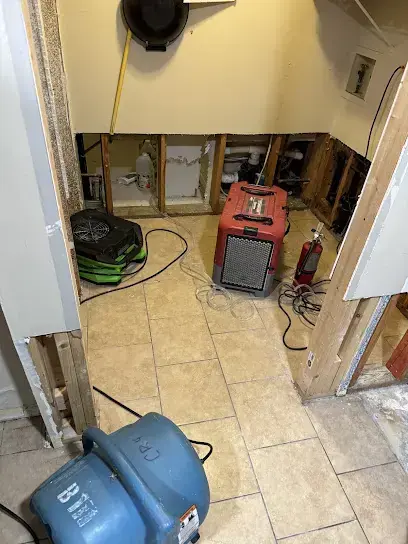
First steps for structural drying and dehumidification in Kenner
- 1
Open the air. Run the air conditioner only if no water is near the unit, and keep doors closed to the wet room.
- 2
Leave fans to the crew. Household fans can move damp air into other rooms.
- 3
Photograph the wet area. Take dated photos of damp walls, floors and baseboards.
- 4
Call for a drying plan. Call a restoration crew to place equipment from readings.
How the Kenner restoration team handles structural drying and dehumidification
Rapid local response
Dispatch runs 24/7 across Kenner, and any active water is treated as urgent at any hour, storms and holidays included.
IICRC S500 drying standard
The drying team sizes air movers and LGR dehumidifiers to the class of loss and keeps them running until the readings say dry.
Claim-ready documentation
A moisture map, daily psychrometric logs and timestamped photos taken before demolition go into the file for the adjuster.
Humid Gulf Coast know-how
Outdoor air near the river holds a lot of moisture, so the crew dries inside closed containment instead of opening windows.
What does structural drying and dehumidification cost in Kenner, LA?
Structural drying in Kenner usually costs from $1,000 for one room to $8,000 or more for Class 4 slab or hardwood work. Equipment count and the number of drying days drive the figure.
One room, Class 1 or 2
- A few air movers
- One dehumidifier
- Daily readings
Several rooms
- Containment
- Several LGR units
- Psychrometric log
Class 4, slab or hardwood
- Desiccant drying
- Drying mats
- Longer monitoring
Ranges are typical, not a quote: water category, square footage, material class and how fast drying started move the number most. Run the water damage cost calculator for a closer range.
How structural drying and dehumidification is handled in Kenner
Measure
Temperature, humidity and moisture are recorded.
Place
Equipment goes where readings call for it.
Check daily
Numbers are logged and equipment is adjusted.
Finish
Materials reach dry targets and the equipment is removed.
Pulling out standing water does not finish a job, because drywall, framing and subfloor keep moisture inside. Kenner sits at or below sea level and in humid Louisiana air, so materials that look dry can stay damp for a long time without equipment. Structural drying removes that moisture on a schedule set by readings.
The equipment and its jobs
- Air movers that push dry air across wet surfaces
- Low-grain refrigerant dehumidifiers that pull moisture out of the air
- Desiccant units for thick or slow materials
- Drying mats for hardwood floors
- Moisture meters and thermal cameras for checking progress
Classes of water loss
The S500 standard groups losses by how much material is wet. A small room with a few damp surfaces is a lighter class, while a deep-seated loss in slab or hardwood is Class 4 and needs desiccant drying, drying mats and longer monitoring. The class decides how much equipment goes in.
Daily checks
Each day the crew reads temperature, humidity and material moisture, adjusts the equipment and records the numbers. Drying ends when the materials, not the room, read dry. See water extraction for the first stage and burst pipe water damage for a common cause.
Why humid air changes the plan
Drying works by moving moisture from wet material into the air and then removing it from the air, so humid air makes that job harder. In Louisiana weather the dehumidifier does much of the work, and doors, windows and vents on the wet room stay closed so the machines are not pulling in outside moisture.
Drywall, framing and floors dry at different speeds
Drywall releases moisture quickly, studs and plates take longer, and subfloor and hardwood take longest. The crew checks each material by itself with a meter, so a dry wall surface is never mistaken for a dry stud behind it.
Structural Drying and Dehumidification across Kenner and nearby towns
Marrero Water Damage Restoration provides structural drying across Kenner ZIP codes 70062 and 70065, including Rivertown, Laketown, Chateau Estates, Woodlake, Seton Park, Loyola Drive, Williams Boulevard and Airline Drive.
The same service nearby: structural drying and dehumidification in Marrero, Harahan, Westwego.
Related water damage services in Kenner
Structural Drying and Dehumidification questions in Kenner, LA
Water spreading as you read?
Marrero Water Damage Restoration runs air movers and dehumidifiers in Kenner buildings, with daily readings and a drying log.
(888) 417-5665 Read the drying answersWhy not just open the windows?
Louisiana air is humid, so an open window can add moisture to a wet room instead of removing it, and closed doors and dehumidifiers work much better.
How long does drying take?
Readings decide, not the calendar. Thick framing, hardwood and concrete take longer than drywall, and humid weather slows every material down.
Is the equipment loud?
Air movers and dehumidifiers make noise and use power, which is a normal part of a dry-out and ends when the readings reach their targets.
What is Class 4?
A deep-seated loss in dense material such as hardwood or concrete, which needs desiccant drying, mats and longer monitoring than a standard loss.
Can drying follow storm damage?
Yes. It begins once the water is out, and the steps are the same as after a pipe leak or any other loss, only with more rooms in play.
Is a log kept?
Yes. Daily readings of temperature, humidity and material moisture go into the file that supports the insurance claim.
Dry framing and drywall to a measured target
Marrero Water Damage Restoration runs air movers and dehumidifiers in Kenner buildings, with daily readings and a drying log.
(888) 417-5665Request a drying plan