The city says most of Kenner lies at or below sea level on land prone to subsidence, and that the low, flat ground leaves very little natural gravity drainage. Rain has to be pumped out, so water that gets inside a building tends to stay until someone removes it.
Key takeaways
- Kenner relies on pumps and canals to move rain out, so floodwater inside a house will not drain away on its own.
- Tropical Storm Arthur in June 2026 dropped nearly 7 inches of rain and the mayor said the drainage system was overwhelmed.
- Extraction comes first because every extra day of standing water pushes moisture into drywall, cabinets and framing.
- Rain flood water is treated as Category 3, so soaked carpet, pad and insulation usually come out.
- Photos, a list of wet items and daily drying readings are what a claim file needs.
Why water stays put in Kenner
Kenner's growth began in the late 1950s, when developers subdivided, drained and filled swampland in the northern half of the city.
Low, flat ground gives the city little natural gravity drainage, so rain must be pumped out through the pumping system. Jefferson Parish uses drainage canals and pumping stations to move stormwater outside the levee system.
The city says the most common source of flood water in Kenner is rain, and that flooding can happen inside and outside the levee system.
Tropical Storm Arthur and other recent rain events
In June 2026 Tropical Storm Arthur dropped nearly 7 inches of rain on Kenner, caused widespread street flooding, and the mayor said the drainage system was overwhelmed.
It was not the first warning. A flash flood warning on July 18, 2024 covered Metairie, Kenner and River Ridge.
A June 2022 storm called a 50-year rain event flooded streets in the New Orleans area, and over 7,500 Jefferson Parish customers lost power, mostly in Kenner.
Each of those events showed the same pattern: the water arrives faster than the system can move it.
What to do before extraction starts
Safety comes first, then documentation, then a call for water extraction in Kenner.
- Stay out of standing water until power to the area is confirmed safe
- Do not use a household vacuum on water, and do not run wet electronics
- Photograph the water depth against walls and furniture
- Lift small valuables, papers and electronics to high shelves
- Open interior doors and cabinets if it can be done safely, to let air reach wet surfaces
- Write down what is wet, because the list will matter for the claim
How extraction and the dry-out work
The sequence is the same whether the water is an inch or a foot deep: pump it out, remove what cannot be saved, dry the rest.
Pumps and extractors
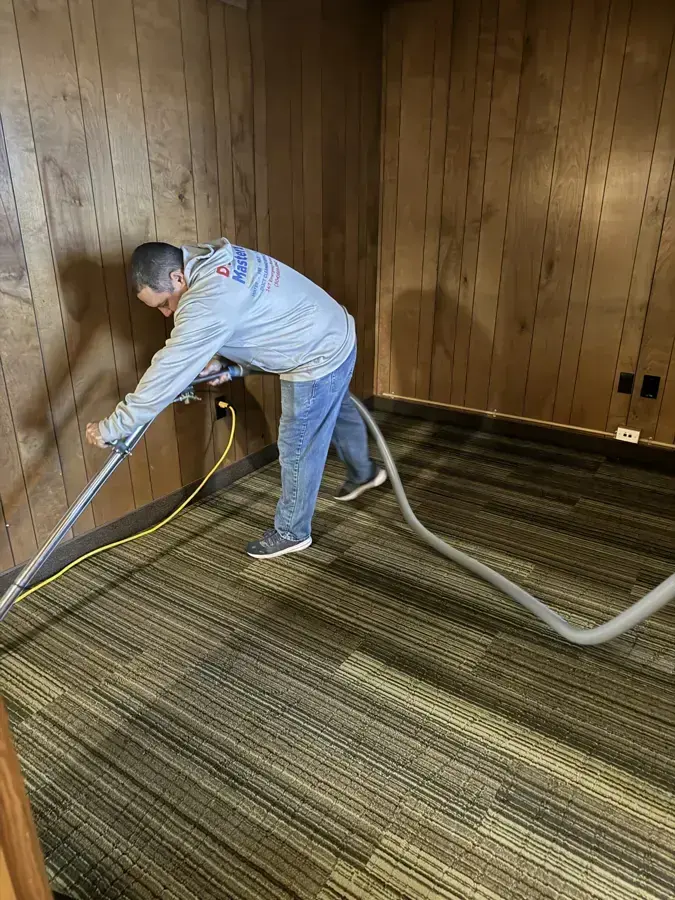
Submersible pumps handle deep water. Truck-mounted and portable extractors then lift what is left from carpet, pad and hard floors.
The faster the water is gone, the less of it reaches the walls, so extraction starts as soon as the area is safe.
What gets removed
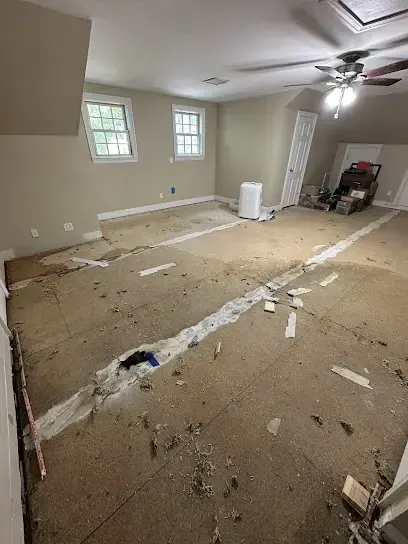
Rain flood water has crossed streets and yards, so it is handled as Category 3. Carpet pad, soaked insulation and low sections of drywall are usually removed.
Hard surfaces and framing are cleaned and treated. Cabinets and hardwood are assessed one at a time.
Drying with measured results
Below-sea-level ground and Gulf Coast humidity make wet framing slow to dry, so structural drying relies on dehumidifiers, air movers and daily moisture readings.
The goal is the IICRC S500 standard: readings that match dry reference material, not a guess based on how the room feels.
Helping the street drain before the next storm
The Jefferson Parish Drainage Department and Kenner Public Works run a drainage maintenance program. Through the voluntary Brooms to Basins program, residents can adopt a catch basin near their home or business and keep it clear.
JPAlert is the Jefferson Parish flood warning system for hurricanes, tropical storms and heavy thunderstorms, and signing up is a quick way to get notice before the next heavy rain.
Rentals, apartments and shared walls
From 2020 to 2024 the owner-occupied rate in Kenner was 63.1 percent, so a meaningful share of homes are rented.
In apartments and duplexes, water that enters one unit can move through shared floors and walls, which is why extraction in a rental covers neighbors' spaces as well.
Questions to ask before work starts
A clear plan from the crew makes the process easier to follow and the claim easier to document.
- What water category is the crew assigning, and why
- Which materials will be removed and which will be dried in place
- Where will equipment run, and for roughly how many days
- How will moisture readings be logged and shared
- What documentation will be provided for the insurer
Late summer: hurricanes and tidal surge
The city names hurricanes and tidal surge as a serious threat in late summer. Lake Pontchartrain bounds Kenner to the north and the Mississippi River to the south.
Because flooding can happen inside and outside the levee system, an owner cannot assume that a levee ends the risk.
Properties in Flood Zone AE with a federally backed mortgage must carry flood insurance, and the city recommends it in Flood Zone X too. According to FEMA, Kenner ranks in the top 10 in Louisiana for flood insurance policy count.
Records and insurance
Homeowner and business insurance policies do not cover flood, which needs a separate policy with a 30-day waiting period, so owners check their coverage before a storm.
Dated photos, the wet-item list and the drying logs support any claim. A crew working through the whole flash flood cleanup process in Kenner keeps that paper trail as part of the job.
The Kenner water damage hub lists every service for the city in one place.
Questions
Why does water not drain out of a Kenner house on its own?
Most of the city is at or below sea level with little gravity drainage, and rain has to be pumped out. Water inside a building has no path out.
How soon should water be extracted?
As soon as it is safe to enter. Standing water wicks into drywall and cabinets and the first 24 to 48 hours also decide whether mold gets a start.
Is rain flood water clean?
No. Water that came over streets and yards is Category 3, which is why porous materials that soaked it up are removed.
Can wet drywall be saved?
Sometimes after clean water, rarely after flood water. Moisture readings show how high the water climbed in the wall.
Does homeowner insurance cover flood water?
Homeowner and business policies do not cover flood. It needs a separate flood policy, and the owner confirms coverage with the insurer.
What happens to furniture during extraction?
Furniture is blocked up off wet floors or moved out. Upholstered pieces that soaked up flood water often cannot be saved.
Does a levee mean a Kenner house cannot flood?
No. The city says flooding can happen inside and outside the levee system, and rain is the most common source.