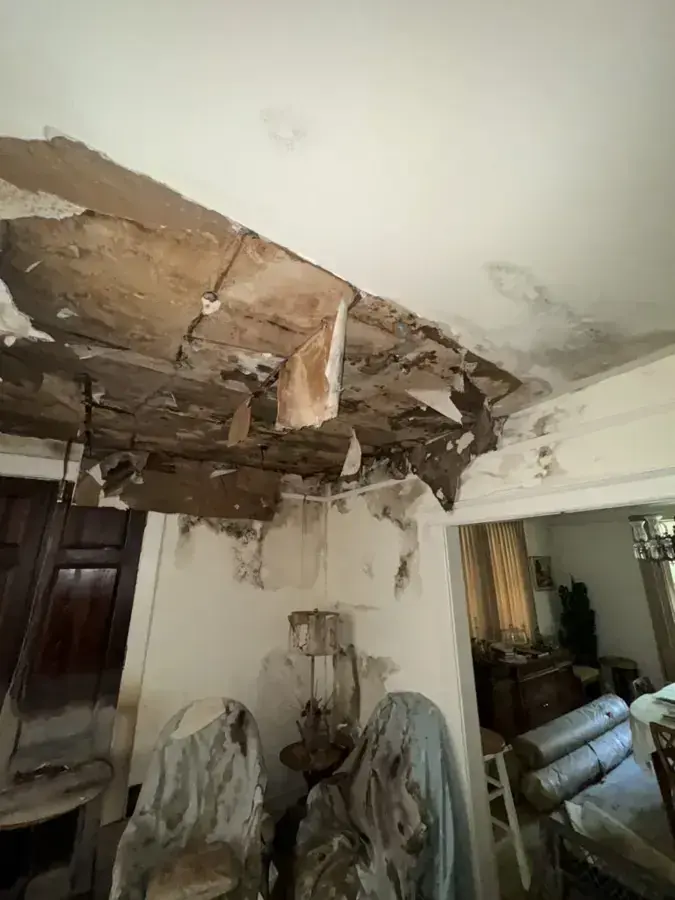
Marrero gets more than 60 inches of rain a year, and much of it arrives in intense thunderstorm bursts. A roof that handles a light shower can still leak when wind pushes rain under shingles, around vents or past worn flashing.
Key takeaways
- A ceiling stain is often the last place a roof leak shows up, because water travels along rafters and insulation before it drips.
- Tracing the leak means checking the attic for wet insulation, dark decking and dripping nails.
- A temporary tarp or sealed patch stops more water coming in while the roof is repaired.
- Wet insulation and drywall are removed or dried, and readings confirm when the structure is dry.
- Photos taken before cleanup and a dated drying log support the insurance claim.
Why Marrero roofs leak in storms
The June to November Gulf hurricane season brings tropical rain, and thunderstorm bursts come year round. Wind-driven rain finds weak points that steady rain misses.
Hurricane Ida in 2021 caused wind and roof damage across Jefferson Parish, which is a reminder that storm seasons test roofs for years afterward.
Typical entry points are loose or missing shingles, cracked flashing around chimneys and vents, worn pipe boots and sealant that has dried out.
How to trace the leak from ceiling to roof
Water rarely drips straight down from the hole. It travels along the underside of the roof deck and rafters and appears wherever it finds a low point.
The stain on the ceiling can sit several feet from the actual entry point.
- Look in the attic for dark or damp decking and wet insulation, ideally during or just after a rain
- Follow stains and water trails upslope from the ceiling stain
- Check around vents, chimneys, skylights and the valleys where roof planes meet
- Look for daylight through the roof deck on a bright day
- Photograph wet areas before anything is moved or removed
What to do while the storm is still going
The immediate goal is to keep the water from spreading and to avoid injury.
- Move furniture, rugs and electronics away from the stain and set out buckets
- Puncture a bulging ceiling only if it is safe, to release trapped water into a bucket
- Stay off a wet roof; ask a roofer to tarp it when the weather allows
- Turn off power to wet areas if the breaker panel is dry and reachable
- Call for roof leak water damage help so the attic and ceiling dry before more damage sets in
What gets removed and what dries in place
Wet attic insulation is usually the first thing to go, because it holds water against the ceiling and stays damp for a long time.
A small, recent leak can sometimes be dried in place. A ceiling that has sagged or stained through is cut open so the cavity can dry.
Insulation and ceiling drywall
Insulation is pulled from the wet area. Drywall that is soft, bulging or stained through is cut back to dry material.
Moisture meters show where the edges of the damage are, so the opening is no larger than it needs to be.
Framing, walls and floors below
Water that ran down a wall can reach baseboards and flooring. Those are checked and dried too.
Structural drying uses air movers and dehumidifiers until readings match dry reference material to the IICRC S500 standard.

Hurricane season and bigger losses
A single bad thunderstorm differs from a tropical system that opens many parts of the roof at once. Hurricane and tropical storm water damage involves several ceilings, wall cavities and sometimes the whole house.
Westwego, also on the West Bank, has a median home build year of 1970, so many roofs have been replaced at least once, and its roof leak guidance points to the same attic-first approach.
Temporary fixes and what to avoid
A tarp or sealed patch is a temporary measure. It buys time until a roofer can make a permanent repair.
- Do not climb a wet or steep roof, because a fall is a worse problem than a leak
- Do not staple a ceiling shut over trapped water
- Do not leave wet insulation in place once the leak is sealed
- Stay on the joists in the attic, because stepping on drywall can break the ceiling
- Do not treat a tarp as a long-term repair
Older roofs in Marrero housing
Marrero housing is mostly 1950s to 1980s ranch homes, with older raised homes near the river and newer subdivisions toward Estelle. Roofs of different ages have different weak points.
Older roofs have had more seasons of heat, wind and rain, which wears sealant and flashing. Newer ones can still leak where a vent or pipe boot was set badly.
What the crew documents
Clear records make the claim easier to assess and show that the structure was returned to dry.
- Moisture readings at the stain, the edges and in the attic
- Photos of removed insulation and drywall
- Daily equipment and reading logs
- A written scope that the adjuster can compare with the repair estimate
The next 24 to 48 hours after a storm
Speed matters because wet insulation and drywall stay wet for a long time in humid air.
- Seal or tarp the roof opening as soon as it is safe
- Remove wet insulation and any ceiling that is sagging
- Start air movement and dehumidification
- Photograph each step and keep receipts
- Check the ceiling again after the next rain for new stains
Photos, repairs and the claim
Take photos of the ceiling, the attic and the roof surface before cleanup starts. Keep receipts for the tarp and emergency repairs.
The owner asks the insurer what is covered and in what order to proceed, since policies differ. A dated drying log with daily readings shows the work was completed.
Within the first 24 to 48 hours wet materials can start to grow mold, so drying should begin quickly after the roof is sealed.
Questions
Why is the stain not under the hole in the roof?
Water travels along the roof deck and rafters before it drips, so the stain can be several feet from the entry point.
Should wet attic insulation be removed?
Usually yes. It holds water against the ceiling and dries slowly, especially in humid air.
Can a stained ceiling be painted?
Not until the ceiling and insulation above it are dry. Painting early traps moisture and the stain comes back.
Is a roof leak covered by insurance?
That depends on the policy and the cause. Photos, receipts for the tarp and the drying log support the claim, and the insurer decides.
Who fixes the roof and who dries the house?
A roofer repairs or tarps the roof. A restoration crew removes wet materials and dries the structure.
What readings show a roof leak is fully dry?
Moisture meters compare the wet area with dry reference material, and the drying log records the daily numbers until they match.
Can an attic be opened up during a storm?
Only if it is safe. Stay on the joists, avoid wet wiring and wait for the weather to ease before pulling insulation.