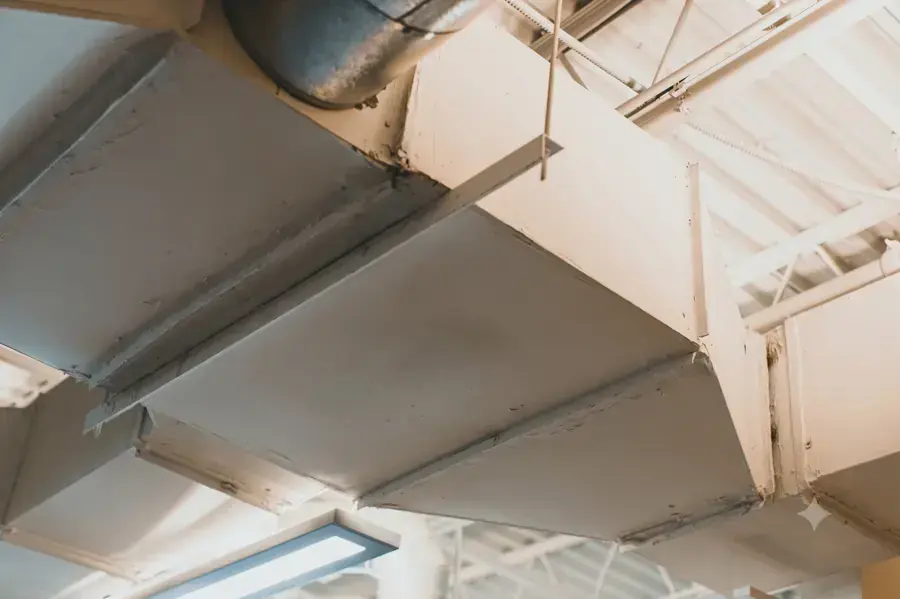
In Marrero the air conditioner runs most months, and every hour it runs it pulls water out of the air. That water is supposed to leave through a small condensate drain, and when the drain clogs, it goes into the ceiling instead.
Key takeaways
- Attic air handlers in Marrero homes drip condensate that must drain away, and a clogged drain or full pan sends it into the ceiling below.
- The first signs are a ceiling stain, sagging drywall or a damp closet, often right under the attic equipment.
- Switch the system off, stop the source and photograph the area before anything is moved.
- Wet insulation holds water against the drywall, so it is removed and the ceiling is dried or opened.
- Painting over a stain without drying what is behind it leaves moisture trapped.
How an AC condensate overflow happens
Marrero has a humid subtropical climate, and outdoor air stays damp for much of the year. An air conditioner removes that moisture as it cools the house, and the water collects in a pan and runs out through a drain.
Algae, dust and debris can slowly clog that drain. When it backs up, the pan overflows and water drips into the insulation and ceiling below.
Many Marrero houses are older ranch homes from the 1950s to the 1980s, and air handlers in attics are common, so a single clogged drain can reach a hallway, a bedroom or a closet.
Signs that the AC is the source
A roof leak and an AC overflow can look alike, so the pattern matters.
- A stain that appears under the attic air handler, not near an outside wall
- Stains that grow on hot days when the system runs more, and stop when it is off
- Water in the drain pan or on the platform under the air handler
- A wet closet ceiling, or a damp spot near a hallway return
- A stain that does not grow after rain, which points away from the roof
What to do first
The system should not keep running while it dumps water into the house.
- Turn off the air conditioner at the thermostat and the breaker
- Put buckets under drips and move furniture and rugs out of the way
- Do not poke at a bulging ceiling with the lights on, because water may be trapped above wiring
- Photograph the stain and, if safe, the attic pan and drain
- Call an HVAC technician to clear the drain and a restoration crew for AC condensate overflow cleanup
What the water category is
Condensate is usually clean when it leaves the coil, but it gathers dust, insulation fibers and growth as it travels through an attic.
For that reason a long-running overflow is treated carefully, and materials that stayed wet for days are often removed rather than dried in place.
How the ceiling and insulation are dried
A fast catch can save the ceiling. A long-running overflow usually cannot.
Small stain, caught early
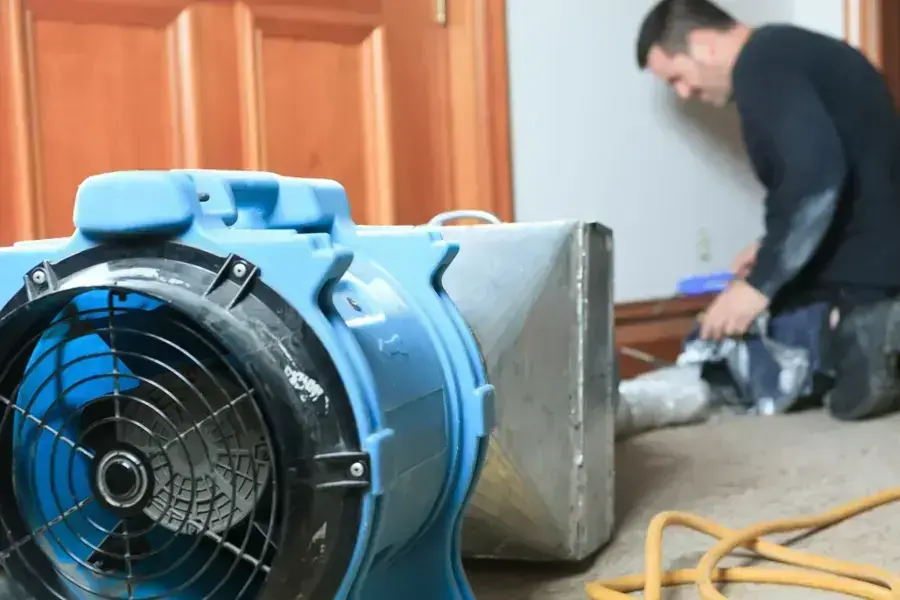
Moisture readings show whether the drywall is wet through. If it is not too far gone, the ceiling can be dried in place with air movers and a dehumidifier.
Wet attic insulation above it is removed, because it holds water against the drywall.
Sagging or long-running damage
When drywall has sagged, softened or stained through, a section is cut out so the cavity can dry.
If the water ran down a wall into a closet or flooring, those materials are checked and dried too. Structural drying readings continue until the area meets the IICRC S500 standard.
Where the air handler sits changes the damage
In an attic, the air handler sits on a platform above ceiling drywall, often over a hallway or closet, with a pan under it as a backup. When the drain and the pan both fail, the ceiling is next.
In a closet or utility room the same overflow soaks the floor and nearby walls instead.
- Attic unit: ceiling stains, sagging drywall and wet insulation
- Closet unit: wet baseboards, carpet and wall bottoms
- Garage unit: a damp slab and stored boxes
The slow overflow nobody sees
Not every overflow is a dramatic drip. A slow, steady one can soak insulation for weeks while the ceiling looks nearly normal.
That is how framing ends up wet with only a faint stain below. Damp materials can start to grow mold, so a suspected slow leak is checked with a moisture meter instead of a guess.
Documentation and insurance
Photos of the stain, the pan and the drain, the technician's note on what clogged and the drying log make up the file.
Coverage for condensate damage varies by policy, and the owner asks the insurer directly. Sudden and accidental wording often matters, so a clear record of when the overflow was found is useful.
Condensate pumps and wet wiring
Where the air handler sits below the point where the drain exits, a small condensate pump lifts the water away. If that pump fails or its tube kinks, the pan overflows in the same way.
A wet ceiling can also hold water around light fixtures and wiring, so the breaker for that room is switched off before anyone works near it.
Stopping a repeat
The drain needs clearing, and a technician can add a float switch that shuts the system off when water backs up. In a climate where the air conditioner works most of the year, a drain check before summer is a low-cost habit.
If a stain appears and nobody is sure whether the roof or the air conditioner is responsible, the roof leak page explains what a roof source looks like.
Air conditioners run hard across the Gulf Coast, and homes in Kenner face the same clogged condensate drain problem.
- Have the condensate drain flushed or cleared before the hot season
- Ask a technician about a float switch that shuts the system off when the pan fills
- Check the pan and drain outlet now and then if the attic is accessible
- Change filters on schedule so dust does not reach the pan
- Pay attention to drip sounds or damp insulation near the air handler
Questions
Why is a ceiling stained under the attic air handler?
A clogged condensate drain or full pan is a common cause. The water drips into insulation and soaks through the drywall.
Should the air conditioner be turned off?
Yes. Running it keeps producing water that has nowhere to go, so it is switched off until the drain is cleared.
Can a stained ceiling just be painted over?
Not before the ceiling and insulation are dry. Paint over a wet ceiling traps moisture and the stain returns.
Is condensate water clean?
It starts clean but gathers dust and debris in an attic. A long overflow is handled as contaminated.
How long does drying take?
It depends on how much got wet. Daily moisture readings show when the ceiling and insulation area are dry.
Is AC overflow damage covered by insurance?
It depends on the policy wording, and some policies treat a slow overflow differently from a sudden one. The insurer decides, and photos and a drying log support the claim.
How often should a condensate drain be cleared?
A technician can advise on timing. Many owners schedule a check before the hot season because air conditioners in Marrero run most months of the year.