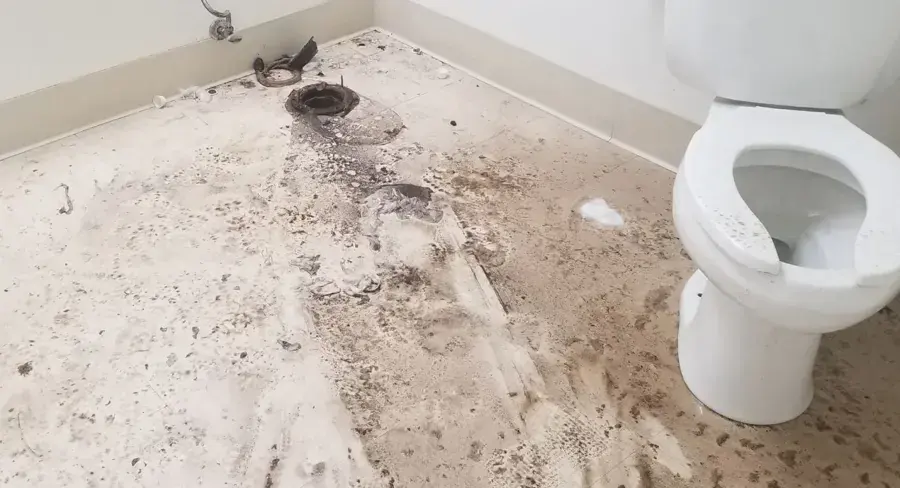
The City of Harahan runs its own sewer pipes and lift stations, and the city has been replacing older sections of that system for several years. For a homeowner, the relevant moment is simpler: waste water is coming up through a toilet, tub or floor drain.
Key takeaways
- Sewage is Category 3 water, so the cleanup involves containment, removal of porous materials and antimicrobial cleaning.
- Harahan's sewer pipes and lift stations are run by the city, and recent work includes Lift Station No. 5 serving Harahan Oaks and Wilson Street sewer pipes.
- Stop using water, keep people and pets out, and do not try to vacuum or flush the problem away.
- A backup can start inside the house or in the main connection, so a plumber and the city both have a role.
- Drywall, pad and carpet that touched sewage generally come out; hard surfaces are cleaned and treated.
How Harahan's sewer system works
Harahan sits at an elevation of about 10 feet, and the city runs its own sewer pipes and lift stations, including Lift Station No. 5 serving Harahan Oaks.
In December 2025 the Harahan City Council accepted the Lift Station 6 work as complete.
In February 2024 the city reported $3.5 million in state Capital Outlay funding to replace and upgrade the remaining sewer pipes along Wilson Street, continuing a project that began in 2022. The city also said it expected to complete about $12 million in sewer upgrades and replacements over four years.
Why backups happen
Aging pipes, roots, grease, a failed pump or a blocked main can all push waste back toward the house. In November 2015 NOLA.com reported Harahan residents fed up with sewer problems, with toilets sometimes dysfunctional for hours.
Heavy rain adds to the load in a low suburb, and the city's upgrades are meant to reduce those problems over time.
The cause matters for the repair, but the cleanup is the same: the water in the house is contaminated.
What to do right away
The goal is to stop adding water and keep contamination from spreading through the house.
- Stop using sinks, tubs, toilets, washers and dishwashers
- Keep children, pets and anyone with a weakened immune system out of the area
- Do not walk through the water and then through the house, which tracks contamination into clean rooms
- Do not try to clear it with a household vacuum or by running more water
- Photograph the source and the affected rooms
- Call a plumber for the blockage and a restoration crew for sewage backup cleanup
Why sewage is Category 3 water
The IICRC sorts water into categories. Category 1 is clean, Category 2 is contaminated, and Category 3 is grossly contaminated and can carry bacteria and other pathogens.
Sewage is Category 3 from the moment it leaves the pipe, and time makes it no better.
What gets removed
Carpet, pad, insulation and drywall that soaked up the water usually cannot be cleaned and are removed and bagged.
Cabinet bases, trim and subflooring are assessed one piece at a time.
What gets cleaned
Hard surfaces, framing and concrete are cleaned and treated with antimicrobial products.
A HEPA air scrubber helps with airborne particles while the work is going on.
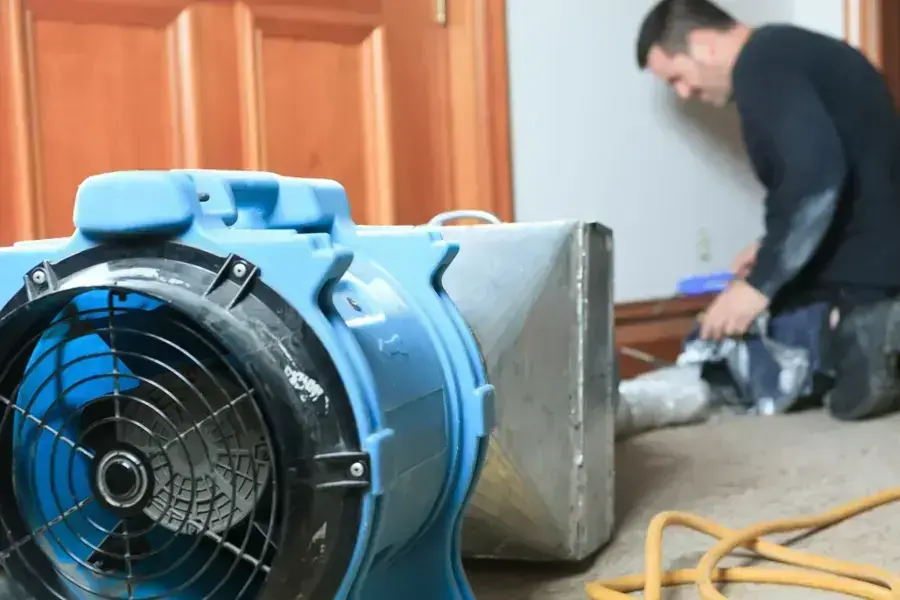
How a sewage backup cleanup runs
The crew sets up containment first so the rest of the house stays clean.
Next comes water extraction to pull standing waste water, followed by removal of porous materials and cleaning of what stays.
Drying finishes the job. Structural drying with air movers and dehumidifiers continues until moisture readings show the structure is dry, because damp materials left behind can grow mold in 24 to 48 hours.
Early signs of a sewer problem
A backup rarely starts with a flood. It usually starts with small signals that are easy to ignore.
Any of these deserves a plumber's attention before the next heavy use of water.
- Slow drains in more than one fixture
- Gurgling from a toilet or tub when another fixture drains
- Water rising in a floor drain or shower when the washer runs
- A sewage smell in a bathroom or laundry area
- Wet spots in the yard along the path of the sewer pipe
Renters, landlords and shared units
Harahan has many apartment buildings from the 1970s and early 1980s along Hickory Avenue, and roughly one in four homes is rented.
A backup that starts in one unit can reach a neighbor through shared drains and floors. Managers who act early limit the spread, because contamination travels on shoes, tools and carts.
Keeping a backup from repeating
The city works on its own pipes and lift stations, while keeping house drains clear is the owner's habit.
- Keep grease, wipes, paper towels and hygiene products out of drains
- Have a plumber camera-inspect the pipe after a backup to find the cause
- Know where the cleanout is and keep it accessible
- Do not run the dishwasher or washer while a drain is slow
- Report repeated problems on the street to the city
Who handles what
A plumber finds the cause and clears or repairs the pipe. The City of Harahan handles the city's sewer pipes and lift stations, and its Regulatory Department takes building permit applications through the MGO Connect system.
Who owns which stretch of pipe between the house and the main can vary, so an owner asks the city or a plumber before assuming.
The insurer decides coverage under the policy, and sewer backup coverage is often an add-on, so the policy language is worth reading before a claim is filed. Photos and a clear record of the cleanup help either way.
The Harahan water damage services cover the cleanup side of the work, from containment to final readings.
Questions
Is sewage in a house always Category 3?
Yes. Waste water that backs up from a drain is treated as grossly contaminated.
Can a homeowner clean it up alone?
Small spills on hard floors can be handled with care, but a backup that reaches carpet, drywall or several rooms calls for trained crews and protective equipment.
Do carpet and drywall have to be thrown out?
Generally yes. Porous materials that soaked up sewage cannot be cleaned reliably, so they are removed.
Does a backup mean the city is at fault?
Not necessarily. It can start in the house pipes, the connection or the city system, and a plumber helps find where.
How long does cleanup take?
It depends on how far the water spread. Extraction and removal come first, and drying continues until readings show the structure is dry.
Why is a sewer backup more urgent than clean water?
Because contamination spreads and soaks into porous materials. Delay raises the risk to health and the amount of material that has to be removed.
What should renters do after a backup?
Stop using water, keep everyone out of the area, photograph the damage and notify the landlord or manager right away. The landlord arranges the cleanup.